Welcome to My Year Without

On January 1, 2008, I made a New Year's resolution to cut out refined sugar for one year. I cut out white refined sugar and corn syrups. My quest to be sugar-free evolved into political interest, public health, and letter writing to food manufacturers. Join me in sugar sleuthing, and learn more about the psychological aspects of sugar addiction, and those who push sugar on us.

Showing posts with label Beverages. Show all posts

Sunday, February 22, 2009

Is There Sugar in My Beer? -Special Guest Post


Michael Tonsmeire is a homebrewer and fermentation nerd living in Washington, DC.

Most people love a good beer, but what really goes into making a beer anyway? Sure most people know malt and hops are important, but is that it? With the huge number of microbrews and imports available these days, walking into a well stocked beer aisle can be almost as intimidating as trying to pick out a wine. There are no ingredient lists on the bottles or six packs so how are you supposed to tell if any of them contain refined sugars?

Even though most people drink beer, few people really know how barley and hops end up as an alcoholic liquid. Whether you are brewing a 5 gallon batch of Russian Imperial Stout at home or a 500 barrel batch of Light American Lager at a mega-brewery the general process is the same, even if the equipment and scale are completely different.

Malted (sprouted then dried) barley is crushed, then mixed with hot water. The color and malt flavor of the beer are determined by the amount and type of specialty (roasted or caramelized) malts that are included. This mixture (called the mash) is held at 150 +/-8 F until the enzymes activated in the malting process break down the starches (made up of long chains of sugar molecules) contained in the endosperm. The majority of the resulting sugar is maltose, but glucose, sucrose, maltriose, and unfermentable dextrins are also created. By controlling the temperature of the mash the brewer can control the general distribution of the different types of sugar created (which in turn determines how sweet the resulting beer will be).

Next comes the sparge where more hot water is slowly added to the top of the grain to help rinse out more of the sugars as the sweet liquid is allowed to drain out the bottom. Along with the sugars, malt flavor, proteins, tannins, and nutrients are also extracted and washed into the brew kettle.

The sweet liquid (now called wort) is brought to a boil. Hops (a flower) are added at various points during the boil for their bittering and aromatic qualities. After a 60-90 minute boil the wort is run through a heat exchanger (to cool to ~65 F for an ale or ~50 F for a lager) and then into a fermenter. Yeast (a single celled fungus) and oxygen are then added to the wort. During the next 12 hours the yeast cells use the oxygen to help them to reproduce. Once the oxygen is used up the yeast switch to anaerobic mode and begin to ferment the sugars in the wort.


Fermentation creates energy for the yeast cells and produces ethanol and carbon dioxide as byproducts (the carbon dioxide is allowed to bubble out of the fermenter). Once fermentation is complete the yeast begins to clump together (flocculate) and fall to the bottom of the fermenter where it can be removed and added to a fresh batch of wort.

After 14-21 days fermentation will be complete and the beer will be pretty clear (lagers are then stored for a period of weeks or months at low temperatures to allow for the flavor to mellow further). At this point the brewery has several options on how to package the beer for sale. Many start by filtering or centrifuging the wort to remove any remaining yeast cells and haze causing proteins. To carbonate the beer the brewer has two options, force in carbon dioxide (in the same way a soda is carbonated), or introduce a small amount of fermentable sugar along with some fresh yeast to create natural carbonation.

This is how a basic beer is made. I don't have the space here to go into using fruit, herbs, spices, coffee, dry hops, honey, lactic acid bacteria, unmalted grains, or any other fun stuff. If you want to learn more about these topics check out my blog.

Since the point of this article is supposed to be how refined sugars are used in brewing, I better get to it.

The good news for anyone looking to avoid refined sugars is that most commercial brewers don't use them. Most beers get all of their sugars for fermentation from the whole grains in the mash. In addition to the malted barley this can include malted or unmalted wheat, oats, rye, rice, and corn/maize.

There are some styles of beer which do have some refined sugar added to the wort. Belgian (and Belgian Style) beers are the most notable example. Many strong Belgian beers get 15-30% of their pre-fermentation sugar in the form of refined beet sugar (sucrose), although this sugar is often caramelized before it is added to darker beers. The sugar helps to lighten the body of the beer and improve drinkability. The good news is that the yeast selectively consumes sucrose and glucose before moving on to maltose and the more complex sugars. This may be one of the most important points for some of you, so I will quote George Fix from page 99 of Principles of Brewing Science:
The elementary sugars glucose and fructose are generally the first to enter the yeast cell. They are followed by sucrose. Before entering the cell, sucrose is first inverted, or split, into glucose and fructose units by invertase.
...
Maltose is brought into the cell at a slower rate than glucose or sucrose. Maltose is transported intact into the cell by the maltose permease enzyme (maltase) and then split inside the cell into two glucose units by the enzyme β-glucosidase.

Some of the cheapest American lagers, malt liquors, and cream ales contain a large amount of corn syrup (up to 40% of their fermentables), but if you are the sort of person worried about consuming refined sugars I am guessing you don't drink a lot of cheap beer (I'm talking even cheaper than Bud/Miller/Coors which each contain corn or rice).

If a brewery wants to do natural carbonation (called bottle or cask conditioning if done in the serving vessel) the brewers can choose to add either a bit of unfermented wort or refined sugar (most often sucrose or glucose). If refined sugar is chosen the amount is the equivalent of just ½ tsp per bottle and effectively all of that consumed by the yeast, creating CO2 which is trapped in the beer along with a tiny bit more alcohol.

In the US many breweries are experimenting with other sugar sources which lighten the body while providing some of their own character. Some examples include honey, maple syrup, date sugar, agave nectar, gur, brown sugar, molasses, and unrefined sugars such as turbinado, muscovado, and rapadura. These are rarely used for more than 10% of the fermentables in a standard beer, but a rare style called a braggot is a combination of a strong ale with a large portion of honey.

If you want to know exactly what goes into a beer you are buying you will need to do some research because the US Government does not want ingredient lists or nutritional facts on alcoholic beverages. Apparently they feel that nutritional information would lead people to think that beer should be thought of as food. I think a whole grain beer is much better for you than an ultra-processed soda, so what if it contains alcohol? Making ingredient lists and nutritional labels mandatory would empower consumers allowing them to weigh the information for themselves.

What to remember:
An obscure Belgian style called Faro (a lambic back sweetened with candi sugar after fermentation) is the only beer that I am aware of that routinely contains unfermented refined sugar.

Virtually no other beers contain sugar molecules from refined sugar because even when they are used the yeast converts them into alcohol and carbon dioxide.

Some English and American style beers (even lower gravity ones) may have a small proportion of refined sugar added to the wort to help lighten the body.

Due to the influence of the Reinheitsgebot (Bavarian brewing purity law) no German brewers add refined sugar (or anything besides malt, hops, yeast, and water) to their beer.

When in doubt take a look at a brewery's website or email them, most will be happy to answer your questions and let you know which if any, of their beers are brewed with refined sugar.

Hopefully this article has answer many of the questions related to the use of sugar in brewing, but if you have anymore please feel free to email me at madfermentationist@gmail.com

References:
Fix, George. 1999. Principles of Brewing Science. Boulder: Brewers Publication.
Hieronymus, Stan. 2005. Brew Like a Monk. Boulder: Brewers Publication.
Mosher, Randy. 2004. Radical Brewing. Boulder: Brewers Publication.
Palmer, John. 2006. How to Brew. Boulder: Brewers Publication.

Friday, February 13, 2009

How Much Sugar is Too Much?


I have to wonder how much is too much because I've been given different answers from....everybody. As a kid, my dentist used to say, "Eat ALL of your Halloween candy right away and cut down on soda." I never drank soda, but I did used to stash my plastic pumpkin full of candy under my bed for months. You read in the news how "over-consumption" of sodas, desserts and other sugary goods may lead to obesity, type 11 diabetes and heart disease. What is "over-consumption?" To me, more than one glass of pure juice a day would be over consumption, but if I told that to anyone in line at the supermarket, I would be laughed out the door and their liters of soda on the check-out belt would explode.

I ask not only about white refined sugar, but all sweeteners, even the good ones. Even the raw honeys and maple syrups and dried fruits can be eaten in excess....so, how much is too much? How much were we meant to be eating? Does a craving ever justify what I do with a craving? Is my craving physical, like my body needing more balance, or is it a learned response to the thought of sugar, which begins producing endorphins and increasing the pleasure portion of my brain, thus rewarding me for having the thought in the first place?

In most cases, I have learned to trust my intuition when I eat. What I eat and how much is mostly obvious to me now because I have taken extreme efforts to see past what's marketed at me. Though the junk food at the grocery store sings like a siren for my attention, I have learned to trust the quiet fruits and silent vegetables. This being said, I can say now while I am not in the middle of a freak sugar craving, that yes, I should carefully limit even my natural sugar intake. However, when the sugar-craving-moment strikes, I often have no gauge as to how much is too much. I've never seen it in writing and I don't give myself a limit because I am usually in such control of things like that. It's those days when I am feeling awful and stressed beyond belief that it would be helpful to have this problem of how much is too much issue solved once and for all. It would be nice to have something in writing to fall back on when I am not sure that I can trust myself.

Here are some samples of what I found. I am sharing this because I find it interesting that there are so many different ideas roaming around out there. To me, it's obvious that we would all be better off if we didn't eat ANY sugar (well, maybe sometimes something natural like dried fruit or raw honey...) but the way for most people is to try to moderate their over-consumption of white table sugar. A great blog that I enjoy reading, A Life Less Sweet, is all about cutting out high fructose corn syrup. It is very informative and most recently someone has blogged as a guest, regarding, "How much sugar is too much for kids?" I highly recommend reading this article.

Andrew Weil, M.D. has this to say about eating sugar in moderation:
  • "Your own response to sugar is the best test of how much you can handle. In some people, sugar triggers mood swings - it brings on a rush of energy followed later by a "crash" into lethargy and depression. Others don't get the rush; they just feel logy and sleepy after consuming sugar. And, of course, some people don't notice any physical or mental effects at all.
  • I recommend cutting down or eliminating sugar if you experience mood swings, fluctuating energy levels, suffer from rheumatoid arthritis, or have frequent vaginal yeast infections. You may notice an improvement in your moods, a lessening of your arthritis symptoms and the frequency of yeast infections when you reduce or eliminate the sugar in your diet."
The American Heart Association has a great take on why to reduce our intake of sugars:

"The primary reasons to reduce the intake of beverages and foods with added sugars are to lower total calorie intake and to get enough of the nutrients your body needs. People who consume large amounts of beverages with added sugars tend to consume more calories. Some experts believe that calories consumed as liquid are not as satisfying and filling as calories consumed as food. This may have a negative effect on people who are trying to achieve and maintain a healthy body weight."

How much sugar is too much? Is there a way to justify or support your answer? I would love to hear from you on this.

Wednesday, December 3, 2008

Virgil's Root Beer Writes Back!

I made a mistake, everybody!

On Thanksgiving I wrote about how upset I was that I had accidentally drunk a bottle of root beer that contained sugar. I wrote about the label not including sugar, but that when I checked the website later in the evening because of how I was feeling, sugar was included in the ingredients. Here is what I found out--Virgil's Root Beer has two ingredient labels on each bottle of root beer. To explain what happened and share the communication I had with Reeds, Inc. (the company who produces Virgil's Root Beer) I have copied and pasted our correspondence here.

(I will not re-post my first letter to them here, but click on THIS to take you to it, if you have not already read it.)

I will begin by posting Reeds, Inc., first response to my letter:

N-
We are very sorry to hear that our product caused you to miss your goal of not having sugar. We do have a list of ingredients on the back label that says “Purified carbonated water, unbleached cane sugar, caramelized unrefined cane sugar, herbs, etc…” Also on the right of the front label under the nutrition facts it says that there is 42g of sugar per bottle. I am sorry you missed that info. Also, we do not have honey in our root beer. Are you sure you read that on our label?

Lastly, we do offer a diet version of our root beer that is sweetened with Xylitol and Stevia. Sorry again that our Root Beer caused you a less than perfect Thanksgiving holiday. If you have any more questions, please feel free to reach back out to me.

-C, Reed's, Inc.

Then I wrote back:

"C-

Thank you for your response. I appreciate the time you took to write me back. However, I still have some concerns.

I would like to point out a couple of very confusing aspects of your labeling. After reading your message to me, I scanned the label on the bottle in an effort to find the ingredients you spoke of. After some effort, I noticed that there is a second ingredients list on the back label that does indeed include sugar as an ingredient. Not seeing that the first time was my mistake. However, on the side of the bottle near the front, in much larger font, there also seems to be an ingredients list. Neither one of the "ingredients" lists ever says, "Ingredients". The list on the back, bottom portion of the label that contains "sugar" in the list, is printed in extremely small font. It is almost unreadable. In fact I had a few people take a look at it and they could not read it without their glasses. Why is the list of ingredients that contains sugar so tiny and hard to read, while the list of ingredients on the side label is much larger and easier to read? This makes your labeling very misleading and easy to misinterpret, as I have done. Is there a reason you list ingredients twice, one time without sugar and one time with sugar?

Every time I want to purchase a product, I make a thorough investigation of the labeling, in an effort to be clear about whether or not sugar is an ingredient. By having two sets of ingredients on your label, I think that people are apt to make the same mistake that I did.

You mention the "nutrition facts" on your label. I never go by this list of information because, although it lists "sugars", it does not identify the source of those sugars. For instance, molasses is made up of sugars but I have chosen to include molasses in my diet as a natural sweetener. 100% fruit juices are another example of no added white sugars, but if you look at the nutrition facts, there will be a high amount of "sugars", even though they are natural fruit sugars. The nutrition facts are not helpful for someone who is concerned with the exact ingredients.

I suspect that you have had other complaints about the duplication of ingredients on your labeling, because as I have said, it is very misleading. I hope that in the future if you revisit packaging ideas, you would take my input into consideration. I believe that you are a company who cares about your customers, but this issue needs to be addressed so this mistake does not continue to be made.

As for the "honey", I apologize for that mistake and recognize that it is not on your label as I had thought.

Thank you for telling me about the diet version of your root beer. Although my local grocery store does not carry it, it is nice to know that it's available.

I hope to hear from you again.
Sincerely,
-N"

Reed's Inc. responds again:

N-

This is honestly the first complaint I have received about our labels and how it can be misleading. I have forwarded your concerns on and it is something that we will pay attention to. The left front label is more of what we call “romance copy” listing the different spices and herbs in the drink. The nutrition facts on the right front label and the contents on the back label can to your point be missed and putting all that together in the future is something we will have to look at.

Please email me your address and I will send you a few bottles of our Diet Virgil’s Root Beer and some coupons. I am sorry again about your unpleasant experience with our products.

-C, Reed's, Inc.

As a follow up to their last letter, I wrote:

"C-
Thank you very much for listening to my concerns and responding today. I really appreciate it and it shows that you sincerely care about your customers.

Also, thank you for informing me about "romance copy"...I will take that into account in my future scanning of labels. I'm sure other companies use it, too, although I have not come across it before.

This experience for me started out negatively, as I was upset that I ingested sugar. However, your addressing the issue has made it a good, learning experience for me. Ultimately, it was my mistake and I am not likely to make this mistake again! I look forward to tasting the diet version of your root beer. Also, I gave my neighbor the left over root beer I had, and she absolutely loved it. You gained a customer in this experience, and I learned a valuable lesson!

Thanks again.
Sincerely,
-N"

I love when a bad experience turns into a good experience. I love that one voice can make a difference.

Wednesday, November 26, 2008

Hot Holiday Drinks


Spicy Mulled Cider
3 C. apple cider
4 whole star anise pods
1/2 tsp. whole allspice berries
1 tsp. whole cloves
1-4 cinnamon sticks
4 white cardamom pods, cracked
2 slices of orange, quartered
2 slices of lemon, quartered

Combine all ingredients in a saucepan over medium heat and bring to a low simmer. Lower the heat and continue to simmer gently for 30 minutes. Ladle into four mugs, add a slice or two of orange and a cinnamon stick, and serve steaming hot. Serves 4. Enjoy!
(-courtesy of Guideposts, December 2008)

Delicious Hot Chocolate
1-2 C. unsweetened almond milk
2 Tablespoons honey
1 heaping scoop of pure cocoa

In saucepan combine milk and honey and heat on medium to medium high while stirring. Whisk in cocoa until all lumps dissolve. Serve right away and enjoy!
(I made this up. Feel free to use any substitutions to your liking. As is, this is very thick and sweet!)

Tuesday, April 1, 2008

Artificial Sugar Sweeteners: Part 2: Aspartame (NutraSweet, Equal)

"Aspartame is 160-200 times as sweet as sugar.
  • In 1965 James M. Schlatter synthesized aspartame while producing an antiulcer drug candidate. In fact, the compound was considered as a potential sweetener only after Schlatter happened to lick his finger, which had accidentally been contaminated with the compound.
  • When ingested, aspartame breaks down into several constituent chemicals, including aspartic acid, phenylalanine, methanol, and further breakdown products including formaldehyde and formic acid.
  • It is unstable under heat and changing pH conditions.
  • Initial safety testing suggested that this caused brain tumors in rats.
  • In 1980 the FDA's Public Board of Inquiry (PBOI) recommended against approving aspartame at that time, citing 'unanswered questions about cancer in laboratory rats.'
  • In 1981 newly appointed FDA commissioner Arthur Hull Hayes, citing data from a Japanese study that had not been available to the PBOI, approved aspartame for use in dry foods. Hayes had confirmed ties with the artificial sweetener industry; most notably, he was close friends with Donald Rumsfeld, at the time CEO of the company that manufactured NutraSweet (aspartame).
  • In 1983 the FDA approved aspartame for use in carbonated beverages, other beverages, baked goods, and confections.
  • In 1995, the FDA Epidemiology Branch chief reported that aspartame complaints represented 75 percent of all reports of adverse reactions to substances in the food supply from 1981 to 1995. Consumers and physicians reported approximately ninety-two different symptoms and health conditions.
  • In 1996 the FDA removed all restrictions on use.
  • Individuals with the previously mentioned condition PKU should not consume this product.
  • Aspartame is available in approximately 6,000 consumer foods and beverages sold worldwide."
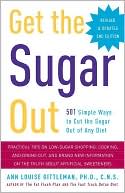
-Get The Sugar Out, by Ann Louise Gittleman, pgs. 55-56

here's more:

"STOP EATING AND DRINKING PRODUCTS THAT CONTAIN ASPARTAME! This includes diet sodas and sugar-free foods that have NutraSweet or Equal.
When aspartame was put before the FDA for approval, it was denied eight times. G.D. Searle, founder of aspartame, tried to get FDA approval in 1973. Clearly, he wasn't bothered by reports from neuroscientist Dr. John Olney and researcher Ann Reynolds (hired by Searle himself) that aspartame was dangerous. Dr. Martha Freeman, a scientist from the FDA Division of Metabolic and Endocrine Drug Products, declared, 'The information submitted for review is inadequate to permit a scientific evaluation of clinical safety.' Freeman recommended that until the safety of aspartame was proven, marketing the product should not be permitted. Alas, her recommendations were ignored. Somehow, in 1974, Searle got approval to use aspartame in dry foods. However, it wasn't smooth sailing from there. In 1975, the FDA put together a task force to review Searle's testing methods. Task force team leader Phillip Brodsky said he 'had never seen anything as bad as Searle's testing' and called test results 'manipulated'. Before aspartame actually made it into dry foods, Olney and attorney and consumer advocate Jim Turner filed objections against the approval.
In 1977, the FDA asked the U.S. attorney's office to start grand jury proceedings against Searle for 'knowingly misrepresenting findings and concealing material facts and making false statements in aspartame safety tests.' Shortly after, the US attorney leading the investigation against Searle was offered a job by the law firm that was representing Searle. Later that same year, he resigned as US attorney and withdrew from the case delaying the grand jury's investigation. This caused the statute of limitations on the charges to run out, and the investigation was dropped. And he accepted the job with Searle's law firm....
In 1980, a review by the Public Board of Inquiry set up by the FDA determined that aspartame should not be approved. The board said it had 'not been presented with proof of reasonable certainty that aspartame is safe for use as a food additive.' In 1981, new FDA Commissioner Arthur Hull Hayes was appointed. Despite the fact that three out of six scientists advised against approval, Hayes decided to overrule the scientific review panel and allow aspartame into limited dry goods. In 1983, he got it approved for beverages, even though the National Soft Drink Association urged the FDA to delay approval until further testing could be done. That same year, Hayes left the FDA amid charges of impropriety. The Internal Department of Health and Human Services was investigating Hayes for accepting gratuities from FDA-regulated companies. He went to work as a consultant for Searle's public relations firm. Interesting. The FDA finally urged Congress to prosecute Searle for giving the government false or incomplete test results on aspartame. However, the two government attorneys assigned to the case decided not to prosecute. Later, they went to work for the law firm that represented Searle. Fascinating. Despite recognizing ninety-two different symptoms that result from ingesting aspartame, the FDA approved it for use, without restriction, in 1996...
Aspartame is a $1 billion industry. The National Justice League has filed a series of lawsuits against food companies using aspartame, claiming they are poisoning the public. In September 2004, a class action lawsuit was filed for $350 million against NutraSweet and the American Diabetics Assocation."

"Skinny Bitch," by Rory Freedman and Kim Barnouin, pgs. 32-35

Wednesday, March 26, 2008

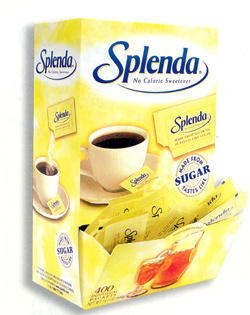
Artificial Sugar Sweeteners: Part 1: "Splenda"


"SUCRALOSE (aka Splenda) is 600 times as sweet as table sugar. It has overtaken Equal as the most popular artificial sweetener.
  • It was discovered in 1976. Put simply, it is made by chlorinating sugar! Yes, it's manufacture involves the same chemical found in swimming pools. How could this be? It was discovered through a misunderstanding. Two Tate & Lyle scientists were looking for a way to test chlorinated sugars as chemical intermediates when there was a gross misunderstanding. Leslie Hough asked his young Indian colleague Shashikant Phadnis to test the powder. Phadnis thought Hough said "taste," and he did--it was very sweet! A final sweetener formula was developed within a year.
  • Sucralose is composed of 50 percent phenylalaline, 40 percent aspartic acid, and 10 percent methyl alcohol.
  • Sucralose mixed with maltodextrin and dextrose (both made from corn) as bulking agents is sold internationally as Splenda.
  • In 1998 it was approved by the U.S. FDA; as of 2006 it has been approved in more than sixty countries.
  • In 2000 concerns over safety surfaced, including lack of long-term studies.
  • Whole Foods Market took an official stand that it will not carry any products containing sucralose because, as the company points out, most of the studies were commissioned by organizations that had a financial interest in the approval of sucralose.
  • Reported symptoms of sensitivity to this compound include headaches, dizziness/balance problems, mood swings, vomiting and nausea, abdominal pain and cramps, seizures and convulsions, and changes in vision. Concerns have also been raised regarding its effect on the thymus gland, crucial to proper immune system functioning.
  • Sucralose can be found in more than 4,500 food and beverage products.
  • Marketed in the United States as a "no-calorie sweetener," Splenda does contain 96 calories a cup, approximately eight times fewer than sugar by volume."
-"Get the Sugar Out" by Ann Louise Gittlleman, pgs. 56-57

Tuesday, March 25, 2008

American Diabetes Association Accepts Money from Soft Drink Company


Check out this article about the American Diabetes Association accepting a multi-million dollar alliance with Cadbury Schweppes Americas Beverages. This beverage company "is still the third-largest soft drink manufacturer in the world and a major producer of sugary candy."
"In exchange for that sum of money, Cadbury-Schweppes can put the ADA's [American Diabetes Assocation] label on all of its diet soda products."
The American Diabetes Association chief medical and scientific officer, "Khan", denied that there is a link between sugar and diabetes. "Khan's statements denying that sugar can cause diabetes came in the same week that the Journal of Pediatrics published a study blaming much of childhood obesity and type 2 diabetes on over-consumption of sugary sodas."

The article mentions the tobacco industry and it's denial of nicotine causing certain diseases. It makes you wonder where people stop caring about health, and begin caring about money.

Keep in mind, this article is from 2005, but still very interesting.
http://www.naturalnews.com/008164.html

To validate this article, I went to the Cadbury Schweppes website and searched for the American Diabetes Assocation alliance. True enough, they have this agreement through 2008. Here is the link to see for yourself: http://www.cadburyschweppes.com/NR/rdonlyres/941D94D0-73F0-4F6B-A519-2AB92A6CC22D/0/Programmes_and_Partnerships.pdf

UPDATE! I just found this video (April 21, 2008).
"Control Your Diabetes By Simply Limiting Your Carbohydrates"
by, askyourholisticdoctor.com