Welcome to My Year Without

On January 1, 2008, I made a New Year's resolution to cut out refined sugar for one year. I cut out white refined sugar and corn syrups. My quest to be sugar-free evolved into political interest, public health, and letter writing to food manufacturers. Join me in sugar sleuthing, and learn more about the psychological aspects of sugar addiction, and those who push sugar on us.

Showing posts with label HFCS. Show all posts

Wednesday, October 27, 2010

Really Really High Fructose Corn Syrup

I have no idea how many of you are soda drinkers, but even if you don't touch the stuff, we all know people who do. Here's an interesting topic for discussion:

Researchers discover soda beverages have higher than expected amounts of fructose. The typical range of fructose in high fructose corn syrups is approximately 45%-55%. However, researchers recently found as much as 65% fructose in sodas, including Coke and Pepsi.

Gross.

What's the problem and who cares? Too much fructose is linked to serious health issues, including metabolic disorders. Marion Nestle of Food Politics says:
  • Fructose: increasing evidence suggests that the metabolism of fructose–which differs from that of glucose–is associated with abnormalities. This means that it is best to reduce intake of fructose from table sugar as well as HFCS. -Click here for full post

If you're interested in reading more about the latest on high fructose corn syrup and sodas, go to the following links:

Los Angeles Times article

Food Politics Blog

Friday, April 16, 2010

Breaking News: Agave Allegedly Worse Than HFCS

Dr. Mercola states, "Many people interested in staying healthy have switched to agave as a safer "natural" sweetener. They want to avoid well documented dangerous sweeteners like HFCS (high fructose corn syrup) but are unaware that most agave is actually WORSE than HFCS."

Rather than copy and paste entire sections here, read the article on Huffington Post yourself. It's long but worth the read, and current. Published yesterday, 4-15-10.

Dr. Mercola must have read my previous post about agave....

Friday, February 5, 2010

Showdown! Agave VS. High Fructose Corn Syrup

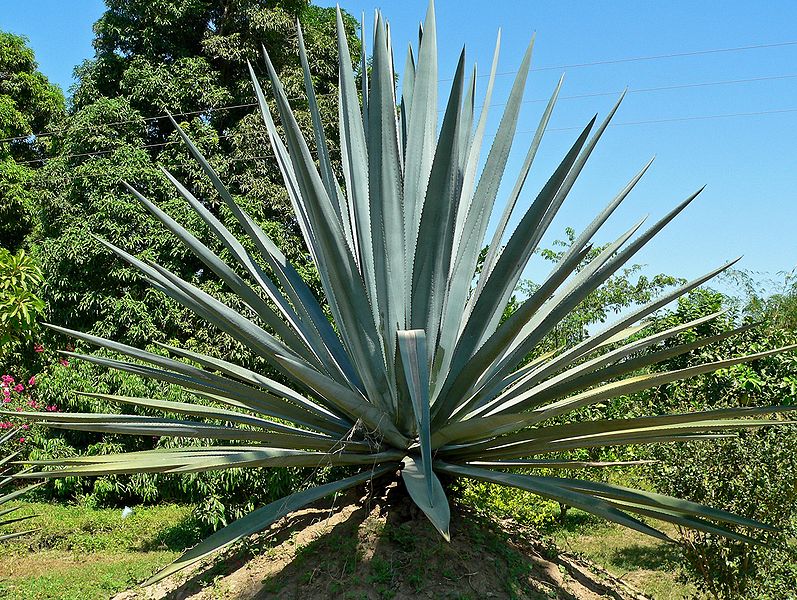
(http://upload.wikimedia.org/wikipedia/commons/thumb/9/96/Agave_tequilana_2.jpg/797px-Agave_tequilana_2.jpg)

Let the showdown begin, but first, a word about agave.

I love it in Coconut Bliss ice cream and I love it in cookies and cakes. I love the perfectly moist consistency without compromised flavor. I love agave-sweetened lemonade. Agave is easy to substitute, relatively cheap to buy (2 bottles for xx bucks at Costco) and easily satiates the pesky sweet tooth.

However.....

I'm very suspicious of it.

Even the organic, raw, "high quality" versions. I'm suspicious even though high quality health food stores carry it. No sweetener should become my darling like agave has become the media's. And something I need to be reminded of--all sugars should be eaten in moderation, even the good ones.

Why I am suspicious of agave:

*It is high in fructose.
*It is higher in fructose than high fructose corn syrup. It ranges from over 55% to 90% fructose.
*Too much fructose is bad for our bodies (see Wiki Fructose, below).
*It is not a locally grown plant. Most agave is imported.
*It is relatively high in calories/about the same as white sugar.
*Though it plays to the tune of my sweet tooth, it keeps me addicted to wanting more sweet stuff.
*It offers no nutrients or benefits to my body.
*There are healthier sweeteners like date sugar, fruit, honey, molasses and stevia.
*There are weak labeling laws for the term "Raw". For the raw foodies out there, you may not be getting what you think you're getting.
*It is touted as low glycemic, however, the glycemic index uses glucose as a measure, not fructose, which can be especially harmful to diabetics, the very people agave is often marketed towards.
*It is touted for it's use in weight loss, but has just as many calories as sugar.
*Fructose has been linked to: raised triglycerides, fatty liver disease, diabetes, heart disease, hypertension, belly fat, and Metabolic Syndrome.

Why high fructose corn syrup deserves more credit than agave:
*It is a by-product of locally-grown corn, whereas most agave nectar is imported.
*It is lower in fructose than agave. The HFCS used in soft drinks is 55/45, fructose/glucose and the HFCS in foods and baked goods is about 42/58, fructose/glucose.
*It's cheaper (true, but obviously tongue-in-cheek)
*Yes it's more processed than agave, but there is no fear of any company adding high fructose corn syrup as a fill to high fructose corn syrup.....
*I have no idea if high fructose corn syrup comes organic.

High fructose corn syrup makes me cringe, so don't get me wrong. It's just that agave should make me cringe, too, but because it is touted as this super-wonderful alternative to sugar the vibe seems to be positive. Neither one offers much of anything but calories. Ahhhh, media hype.

For those of you who read my previous post about agave, here are more bits and pieces of information:

"Refined sugar, corn syrup, and agave nectar contained minimal antioxidant activity...." -Journal of the American Dietetic Assocation .

"Fructose consumption has also been related to the metabolic syndrome and to abnormal lipid patterns. This evidence suggests that we should worry about our current level of fructose consumption, which has been increasing steadily for over 200 years and now represents over 10% of the energy intake of some people." -Int J Obes

Marion Nestle mentions agave in her blog, Food Politics:

"Q. Can you please explain what benefits, if any, there are in using a “natural” sweetener, e.g. agave, over regular sugar? Are there any differences in terms of glucose/fructose makeup?

A. Agave is more expensive so you probably won’t use as much of it. Beyond that, it is higher in fructose than table sugar or honey. This is because agave contains inulin, a polymer of fructose, which must be hydrolyzed (broken down by heat or enzymes) to fructose to make the sweetener. It’s a processed sweetener requiring one hydrolysis step, requiring more processing than honey and less than high fructose corn syrup. It has the same number of calories as any other sugar, about 4 per gram or 16 per teaspoon."

"HFCS [sub the word agave here] does contribute to added sugars and calories, and those concerned with managing their weight should be concerned about calories from beverages and other foods, regardless of HFCS content." -Am J Clin Nutr.

The following articles have more information about agave and fructose:
Unfortunately, some of my favorite sources had very little or nothing to say about agave nectar. To me this means it is under-studied and another good reason to stick to other sweeteners.

This article is from the Mercola website:

{"Agave syrup is neither a natural food nor organic.

Fully chemically processed sap from the agave plant is known as hydrolyzed high fructose inulin syrup. According to Dr. Ingrid Kohlstadt, a fellow of the American College of Nutrition and an associate faculty member at Johns Hopkins School of Public Health, '[Agave is] almost all fructose, highly processed sugar with great marketing.'

Agave syrup is not low calorie
.
Agave syrup is about 16 calories per teaspoon, the same as table sugar.


Agave syrup may not have a low glycemic index
.
Depending upon where the agave comes from and the amount of heat used to process it, your agave syrup can be anywhere from 55 percent to 90 percent fructose! (And it's likely you won't be able to tell from the product label.) This range of fructose content hardly makes agave syrup a logical choice if you're hoping to avoid the high levels of fructose in HFCS. And if you're diabetic, you should know that the alleged benefit of agave for diabetics is purely speculative. Very few agave studies have been documented, and most involved rats. There have been no clinical studies done on its safety for diabetics.

Other Reasons You Should Steer Clear of Agave (Mercola article, continued)
1. There are very few quality controls in place to monitor the production of agave syrup. Nearly all agave sold in the US comes from Mexico. Industry insiders are concerned agave distributors are using lesser, even toxic, agave plants due to a shortage of blue agave. There are also concerns that some distributors are cutting agave syrup with corn syrup--how often and to what extent is anyone's guess. In addition, the FDA has refused shipments of agave syrup due to excessive pesticide residues.

2. Agave syrup is not a whole food--it is fractionated and processed. The sap is separated from the plant and treated with heat, similar to how maple sap is made into maple syrup. Agave nectar is devoid of many of the nutrients contained in the original whole plant.

3. Agave syrup is not a live food. The natural enzymes are removed to prevent agave syrup from fermenting and turning into tequila in your food pantry or cabinet.

4. Agave is, for all intents and purposes, highly concentrated sugar. Sugar and sweeteners wreak havoc on your health and are highly addictive."} -Mercola.com


Let's keep the discussion open. Can't wait to hear your thoughts on this one!

Friday, November 6, 2009

Center For Consumer Deceit

What do you think of when you read the following title: Center for Consumer Freedom?

I was sitting at a restaurant the other day and an interesting commercial came on the big, annoying screen above the bar. Click here for the link to the commercial. It was another silly skit defending high fructose corn syrup. First of all, I could care less whether HFCS is exactly the same or different from white table sugar! Does that in any way excuse it from wreaking havoc on our health? Ironically, the only thing the corn people can say about their beloved HFCS is that it's the same as sugar--as if that solves the problem. The problem is that it exists in the first place, is needlessly but highly prevalent in foods and beverages and is linked to obesity. But I am getting off subject.

As I watched the commercial, I noticed this in the lower part of the screen: PAID FOR BY THE CENTER FOR CONSUMER FREEDOM. I thought to myself, Hm. That sounds legitimate. Perhaps we are blowing this HFCS-thing out of proportion?

The next thing I know, Jeff is busy Googling the Center for Consumer Freedom (CCF) on his iPhone. Annoying!

But I'm glad he did, because he shared with me what this Center is all about, and we laughed like little kids. What an appealing, creative, deceitful title. What a load of @!!#.

After looking at their website, I have to say that I probably disagree with EVERYTHING they say. It's not that surprising when you learn that the Center is supported by over 100 companies, including "the restaurant industry, food companies and individual donors. The forerunner to the CCF was the Guest Choice Network, which was organized in 1995 by Richard Berman, executive director of the public affairs firm Berman and Company, with $600,000 from the Philip Morris tobacco company, 'to unite the restaurant and hospitality industries in a campaign to defend their consumers and marketing programs against attacks from anti-smoking, anti-drinking, anti-meat, etc. activists ...'"

Do you know what a "front group" is? It's an "organization that purports to represent one agenda while in reality it serves some other party or interest whose sponsorship is hidden or rarely mentioned. The front group is perhaps the most easily recognized use of the third party technique."

Beware of the CCF: "For example, Rick Berman's Center for Consumer Freedom (CCF) claims that its mission is to defend the rights of consumers to choose to eat, drink and smoke as they please. In reality, CCF is a front group for the tobacco, restaurant and alcoholic beverage industries, which provide all or most of its funding." (sourcewatch.org)

Go to the CCF website and see for yourself all the incredible health and wellness groups and activites they speak against! They attack preventative medicine, treating animals with respect, organic food, eating healthy and more. I went to their "About Us" section and almost choked on my tongue.

Here are some snippets:
  • "Consumer freedom is the right of adults and parents to choose how they live their lives, what they eat and drink, how they manage their finances, and how they enjoy themselves.
  • Unfortunately, Americans have been force-fed a diet of bloated statistics hyping the problem of obesity. Those statistics have been used by Big Brother government bureaucrats and greedy trial lawyers to justify a host of noxious "solutions," like extra taxes on certain foods and lawsuits against anyone who grows, makes, or serves anything tasty.
  • A growing cabal of activists has meddled in Americans’ lives in recent years. They include self-anointed "food police," health campaigners, trial lawyers, personal-finance do-gooders, animal-rights misanthropes, and meddling bureaucrats."
Down with those who campaign for health! Darned those crazy food police and do-gooders! Can you imagine the nerve of CCF saying these things?! Who could possibly be their audience, besides each other?

The name of their HFCS commercial is "sweetscam.com". The real scam is that when people see the commercial, they may make the same mistake I did, but without investigating who the Center for Consumer Freedom really is--a front group who wants us to throw away our money and health on their food.

Tuesday, August 25, 2009

The Irony of Junk Food

Websites that promote apples do not disparage oranges or peaches or cherries. If you look at websites that sell whole grains, they do not disparage other healthy whole food products.

What I find interesting is that Junk Food "A" may talk very highly about their product, but have something terrible to say about Junk Food "B". The sugar people will go off about alternative sweeteners, and the alternative sweetener folks will go off about both HFCS and sugar. All the while, each company's product is touted to be quite superior. If each of the junk food companies has something legitimate to say about the other junk food company's products, isn't this a sure sign that it's all....JUNK?!

Here are some examples:

What the Sugar Association has to say: "HFCS does not exist in nature. It is a highly processed product that requires the ingenuity and efforts of man for its creation, and was unknown to the world until the 1970s. Sugar is all-natural and has been the primary sweetening ingredient worldwide for thousands of years and still is the predominate sweetener in every country, except the United States. Sugar exists naturally in almost every fruit and vegetable but most abundantly in sugar cane and sugar beets."

The Sugar Association has gone so far as to create a website called The Truth About Splenda which further disparages another competitor.

Here is what SPLENDA has to say: "SPLENDA® No Calorie Sweetener may be used as part of a healthy diet that includes a variety of nutritious foods in moderate portions. Because SPLENDA® No Calorie Sweetener tastes like sugar and can be used for cooking and baking, it helps meet consumer demand for good-tasting foods and beverages without all the empty calories of sugar."

and...

"Although sucralose (generic term for SPLENDA) is made from a process that begins with sugar, the body does not recognize it as sugar or a carbohydrate. It is not metabolized by the body for energy, so it is calorie-free.....it passes through the body without being broken down for energy, so it has no calories, and the body does not recognize it as a carbohydrate. " This is saying that SPLENDA is not recognized by the body as a food, which in my opinion means we have no business putting it in our bodies!!

The NutraSweet Company is proud of their product because of its lack of calories: "Aspartame has many benefits. Aspartame can reduce or replace the sugar and calories in foods and beverages while maintaining great taste. Thus, aspartame offers one simple step in helping people move closer to achieving a more healthful diet." That's funny.

Saccharin comes right out and says, "Although the totality of the available research indicates saccharin is safe for human consumption, there has been controversy over its safety. The basis for the controversy rests primarily on findings of bladder tumors in some male rats fed high doses of sodium saccharin." Oh, woops. Just bladder tumors. No worries. Then I wonder why convenient stores have saccharin warning signs in their store windows?

Again, healthy whole foods will never be controversial. We don't need science to tell us what our common sense leads us to believe about healthy foods....that an apple is good nutrition, for example. If there is any controversy about a food you are eating, I would suggest you consider eating something that has never been controversial.

You can't go wrong by eating whole foods, keeping in mind portion sizes. You might go wrong by eating JUNK. To me, it's not worth risking what I don't know.

Lastly, I include with the Corn Refiner's Association take on their product HFCS, because it is so funny to me: "Mention corn syrups and consumers think of the sweetness and energy they offer--outstanding characteristics--" More like mention corn syrup and watch people roll their eyes. The press, the commercials and the lobbying is just ridiculous. I can't imagine anyone going to such great lengths to lobby for steel cut oats or lima beans.

Here is an interesting article about HFCS, with quotes from the president of the Corn Refiner's Association, Audrae Erickson. HFCS or sugar? Sugar or HFCS?

The press on this right now is downright silly. We have companies responding to consumer demand by taking HFCS out of their products and going back to using sugar. Hooray? Really? To me this is the silliest battle between highly processed junk foods that we should eat less of altogether. I don't eat either one, and it's difficult to avoid because most packaged products have one or the other. I usually end up eating fruit, darnit.

My point is that no matter how ignorant we might want to feign to be, it's obvious what is healthy whole food and what is not. I don't believe that the "foods" created in the laboratories were made to improve our health, although many of the artificial sweetener producers would argue and say that they are providing a low-calorie sweetener alternative. What good does it do to put a low-calorie sweetener in a product that is loaded with junk and many other types of calories?